 Basket (
From the workshop
The oils we leave in the bar
September 1, 2026
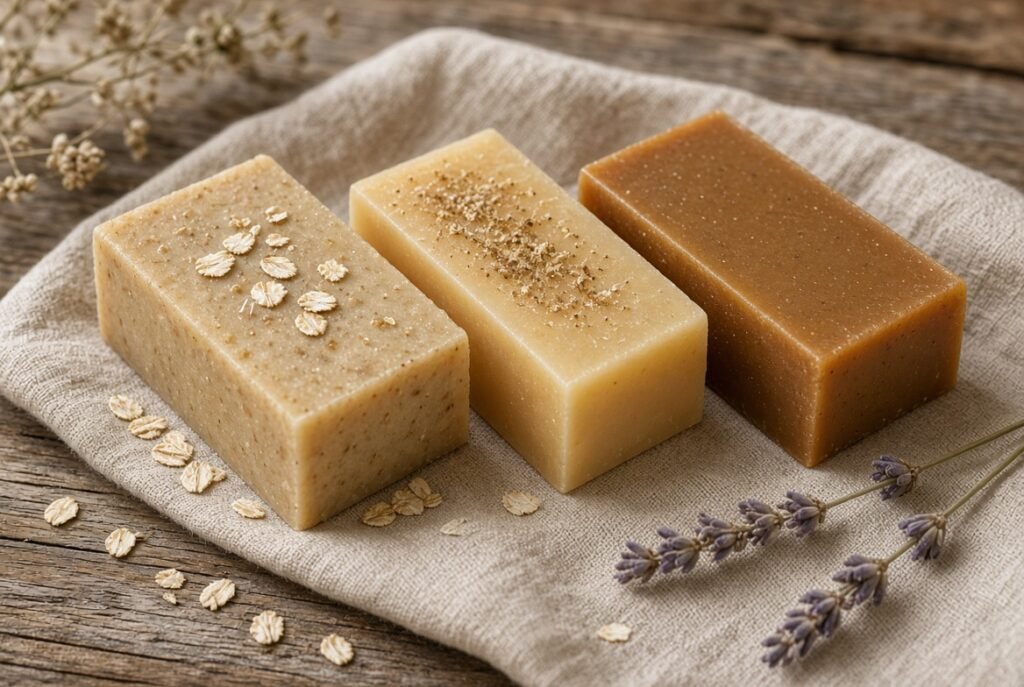
Every soap recipe starts with oils that are meant to become soap. Coconut for bubbles. Olive or tallow for the body of the bar. A hard fat so the thing does not collapse. That is the structure.
Then there are the oils we refuse to turn into soap.
Jojoba is the closest plant oil to human sebum. It does not sit on top like a cheap mineral oil. It behaves as if it belongs there. We add it after the cook so it is still jojoba when you rinse.
Sweet almond oil is the softness. It is the reason a bar can clean without that tight after-feel. People with dry or easily bothered skin notice it first.
Cocoa butter is the quiet workhorse. It helps the bar stay firm, gives a creamy slip, and leaves a little richness that lasts past the towel. It is also why some of our bars have that faint chocolate-warm scent even when the fragrance is something else.
We name them because “moisturizing oils” is how a detergent bottle hides a tenth of a percent of something cheap. If it is in one of our bars as a leftover oil, it is in there on purpose and in a quantity that can do something.
The rest of the formula is equally plain. Grass-fed tallow in the heritage bars. Olive in the Castile line. Honey or beeswax in the bars that carry Lizzy’s name. Colloidal oat in the gentler batches. What you will not find is a filler added to stretch a pot, or a surfactant added to fake a lather the oils did not earn.
Read the listing. If you want the longer version, ask at the table. We will tell you what went in the pot that morning.
— Cheryl, Lady B