 Basket (
From the workshop
Heritage soap
August 20, 2026
People hear “handmade soap” and picture a pretty mold and a good smell. That is the last twenty minutes. The part that matters happens in the pot.
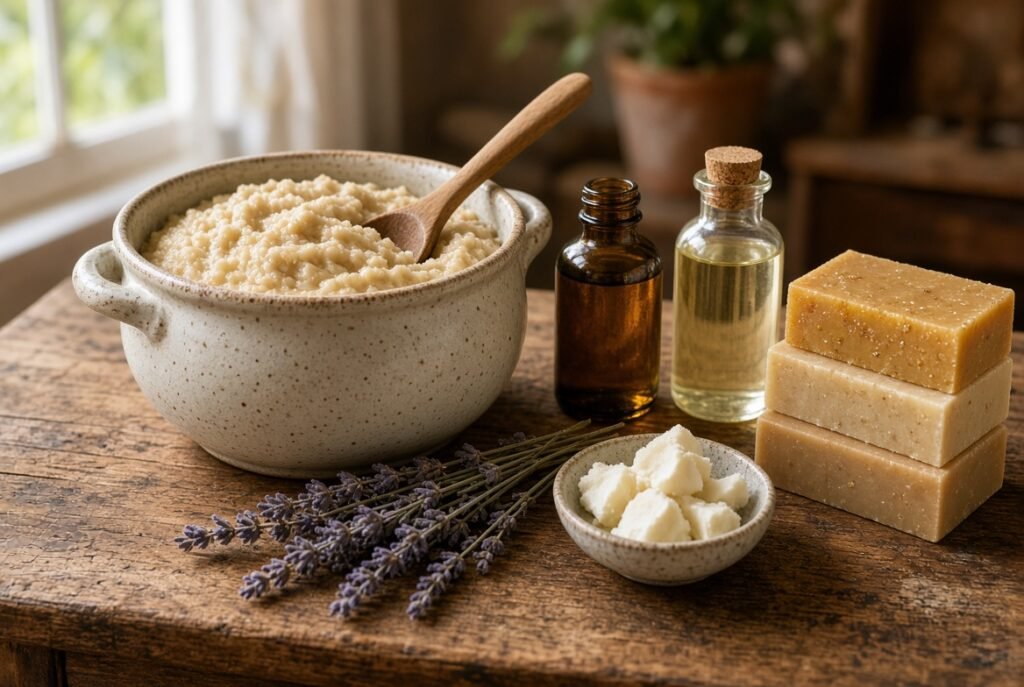
We make heritage soap the old way: hot process. Oils and lye go in. We cook them until the reaction is done — until there is no lye left looking for something to eat. The batter turns thick, like mashed potatoes, and you can see that the work is finished. Only then do we add the oils we want to stay oils.
That last step is the whole point.
In a cold-process formula, the extra fat is calculated up front and you hope the math holds. In our kettle, jojoba, sweet almond oil, and cocoa butter go in after saponification. They do not get turned into soap. They remain themselves. Jojoba because it behaves like skin’s own sebum. Almond oil because it softens without feeling greasy. Cocoa butter because it gives the bar backbone and a little cushion when you rinse.
That is what “unsaponified oils” means here. Not a mystery leftover. A choice.
Heritage, for us, is not a rustic font on a label. It is refusing to rush the cook, refusing to fake the superfat, and refusing to call a detergent a bar of soap. Lady B’s Soaps was built on traditional artisan methods for a reason. The recipes have heart and honey in them because of Lizzy Bee. The method is older than that. It is the method that lets us look at a finished bar and know exactly which oils are still in it.
Slow beauty for real life looks like a pot on the stove, a wooden spoon, and the patience to let chemistry finish before we start decorating.
If you pick up a bar at Flagler Beach or European Village and it feels denser than the supermarket kind, that is the cook. If it does not leave your skin tight, that is the jojoba, the almond, and the cocoa butter we put in on purpose.
— Cheryl, Lady B